 New Cars
 Used Cars
 Rentals
 Boats
Boats Motorbike
 Utility
 Services
 News & Review
Car News, Reviews and Advice in Mauritius
-

The Roadblock Lottery: Why One in Four Drivers Lost This Weekend
If you were out on the roads between Saturday 3 and Monday 5 October, there is a good chance you met a police checkpoint. Operation "Weekend Crackdown" was the first major island-wide operation since the Road Traffic (Amendment) Act 2026 came into force on the night of 29 to 30 September, and the numbers suggest the police intend to make the new law felt.The Weekend in NumbersFrom 6am on Saturday to 6am on Monday, officers checked 8,255 vehicles across the island. Of those, 2,063 resulted in
-
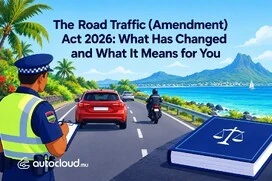
The Road Traffic (Amendment) Act 2026: What Has Changed and What It Means for You
When we last covered this, the new road traffic measures were still proposals. They are now law.The Road Traffic (Amendment) Act 2026 was passed by the National Assembly on 1 September 2026, and most of its provisions came into force at midnight on 29 September. Land Transport Minister Osman Mahomed set out the details at a press conference in Port Louis the day before.Not everything applies yet. Some measures are live now, others follow later. Here is what you need to know,
-
![Up, Down or Holding? The Honest Outlook for Fuel Prices]()
Up, Down or Holding? The Honest Outlook for Fuel Prices
Scroll through the local press this month and you could be forgiven for bracing yourself at the pump. Headlines have warned of another maximum increase, with talk of the litre going well beyond Rs 75. Then, this week, oil prices dipped on news of talks between the United States and Iran.So which is it? A fresh shock, or relief on the way? The honest answer sits somewhere in between, and it matters for how you plan your motoring budget.A
-
![KOREK! What the Government's New App Means for Motorists]()
KOREK! What the Government's New App Means for Motorists
Mauritius now has a single digital gateway to public services, and the first thing it does for motorists is put your driving record in your pocket. KOREK! is the rebranded MauPass app, relaunched as a national super app that will bring government services under one login. The digital penalty point system was among the first services to go live. Here is how it works for Mauritian motorists.Your points, in real timeOnce you sign in with MauPass, drivers aged 18 and
-
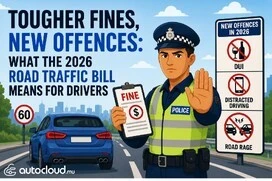
![Tougher Fines, New Offences: What the 2026 Road Traffic Bill Means for Drivers]()
Tougher Fines, New Offences: What the 2026 Road Traffic Bill Means for Drivers
Mauritius is about to overhaul how it punishes dangerous and careless driving. The Road Traffic (Amendment) Bill (No. XV of 2026), tabled by Minister of Land Transport Osman Mahomed with an explanatory memorandum dated 28 August 2026, sharpens penalties across the board and creates new offences that will touch almost every driver on the island.Here is what stands out.Fines That Now Reach Rs 1 MillionThe heaviest measure targets a new offence: causing the death of another person while driving without a valid
-
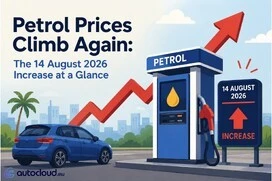
![Petrol Prices Climb Again: The 14 August 2026 Increase at a Glance]()
Petrol Prices Climb Again: The 14 August 2026 Increase at a Glance
If your last fill-up felt pricier, you were not imagining it. From 14 August 2026, petrol has gone up again. Here are the key takeaways for Mauritian motorists.What Has ChangedPetrol (Mogas) has risen from Rs 64.25 to Rs 70.65 per litre, an increase of Rs 6.40, or just under 10 per cent. Diesel has been held steady at Rs 71.25, sparing buses, hauliers and bakeries a second blow. In real terms, a full tank now costs roughly Rs 256 to Rs 416 more depending on its size, and
-
![A Market Under Pressure: Why Fewer Mauritians Are Buying Cars in 2026]()
A Market Under Pressure: Why Fewer Mauritians Are Buying Cars in 2026
The new car market continues to lose momentum, and the figures for the first seven months of 2026 suggest the slowdown is now settling in. What the numbers also make clear is that this is not a new-car story alone. The imported vehicle segment is under even greater strain.A quick note on terms. Mauritius's car market runs across three broad segments: brand new vehicles, imported vehicles brought in largely as reconditioned units by specialist dealers, and locally pre-owned cars that
-
![Strong Demand, Deeper Choice: Mauritius's Automotive Market Mid-2026]()
Strong Demand, Deeper Choice: Mauritius's Automotive Market Mid-2026
Mauritius keeps adding vehicles to its roads, and the latest numbers show no sign of a slowdown. At the end of June 2026, the island counted 761,531 registered vehicles, up from 746,961 at the close of 2025. That is 14,570 extra vehicles in just six months, a rise of 2%.It sounds like a small percentage, but the pace matters. Registrations reached 756,673 by April 2026, so most of that growth landed in the first half of the year. Add up six months at this rate and the
-
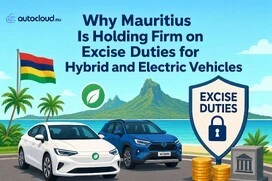
![Why Mauritius Is Holding Firm on Excise Duties for Hybrid and Electric Vehicles]()
Why Mauritius Is Holding Firm on Excise Duties for Hybrid and Electric Vehicles
When the 2025-2026 budget reintroduced excise duties on hybrid and electric vehicles, some motorists hoped the measure might be softened over time. The government has now signalled that the duties are here to stay.During the post-budget debriefing on Saturday 4 July, Junior Minister of Finance Dhaneshwar Damry set out the reasons for maintaining these duties. His explanation focused less on revenue and more on how Mauritius generates the electricity that powers its vehicles.The emissions argumentDamry noted that the transport
-
![Fair Competition or Unfair Advantage? The Uber Question in Mauritius]()
Fair Competition or Unfair Advantage? The Uber Question in Mauritius
Alalila 2.0 powered by Uber launched on 25 March 2026 without formal NLTA approval. The government has flagged this as a concern and is now developing a regulatory framework. But whilst the service rolls out, two very different perspectives on its impact have emerged.The Commuters ViewFor everyday commuters, Uber addresses a real problem. You can now book a ride with transparent, upfront pricing through an app instead of negotiating fares at the roadside. The service uses licensed PSVL drivers, so you're not
-
![Mauritius Budget 2026: What Changed for Vehicle Owners]()
Mauritius Budget 2026: What Changed for Vehicle Owners
The 2026 budget speech has brought some changes to how Mauritians own, register and operate vehicles. If you're a car enthusiast, a business owner, or simply someone who relies on your vehicle daily, these measures will affect you in ways both practical and financial. Let's unpack what's happened and what it means.The Cost of Keeping That Special Number PlateOne of the most immediate changes is the new annual fee on old and personalised registration marks. If your vehicle sports a
-
![Mauritius Raises the Bar on Distracted Driving: Tougher Penalties Take Effect Today]()
Mauritius Raises the Bar on Distracted Driving: Tougher Penalties Take Effect Today
Driving requires your full attention. It sounds obvious, yet the temptation to glance at a notification or fire off a quick message whilst behind the wheel remains a daily reality for many. As of today, 10 June 2026, Mauritius has made that habit considerably more costly.What Has Changed?The number of penalty points for using a handheld phone or microphone whilst driving has increased from a range of 3 to 6 points, to a new range of 5 to 10 points, effective from 10 June 2026. This
-
![A Wake-Up Call for Mauritius: Road Fatalities in 2026 Are at a Record High]()
A Wake-Up Call for Mauritius: Road Fatalities in 2026 Are at a Record High
It has become almost impossible to open Facebook these days without being confronted by yet another devastating road accident here in Mauritius. A familiar name, a shared post, a community in shock. What once felt like tragic but isolated incidents now feels like a relentless, weekly drumbeat of loss that our island simply cannot keep ignoring.By 28 May 2026, Mauritius had already recorded 57 road deaths from 54 fatal accidents. With seven months of the year still to go, 2026 is on track to
-
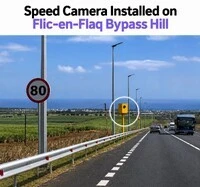
![Speed Camera Installed on Flic-en-Flac Bypass Hill]()
Speed Camera Installed on Flic-en-Flac Bypass Hill
The Flic-en-Flac Bypass has been a long time coming and a genuine improvement for commuters travelling to and from the west of Mauritius. The road was designed to ease long-standing congestion around Cascavelle and Flic-en-Flac, improving overall connectivity across the region. For most drivers, it has done exactly that.The hill section, however, quickly earned the nickname "the Cascavelle Racetrack" among locals. The name took on a grimmer dimension in late December 2025 when a video circulating on social media showed
-
![Lots Full, Buyers Gone: Why New Cars Are Gathering Dust]()
Lots Full, Buyers Gone: Why New Cars Are Gathering Dust
There is something quietly alarming about a brand-new car sitting in a dealer's lot for months on end. It has never been driven, never been loved, and yet it is already costing money. This is the reality facing the automotive market right now, and it is a problem that touches everyone from the importer to the everyday buyer.How Did We Get Here?The short answer is taxation. Following a revision of excise duties that came into effect in June 2025,










Subscribe to Newsletter
Subscribe to our newsletter
