New Cars
 Used Cars
 Rentals
 Boats
Boats Motorbike
 Utility
 Services
 News & Review
Will Penalty Points Make Mauritius’ Roads Safer This Time?
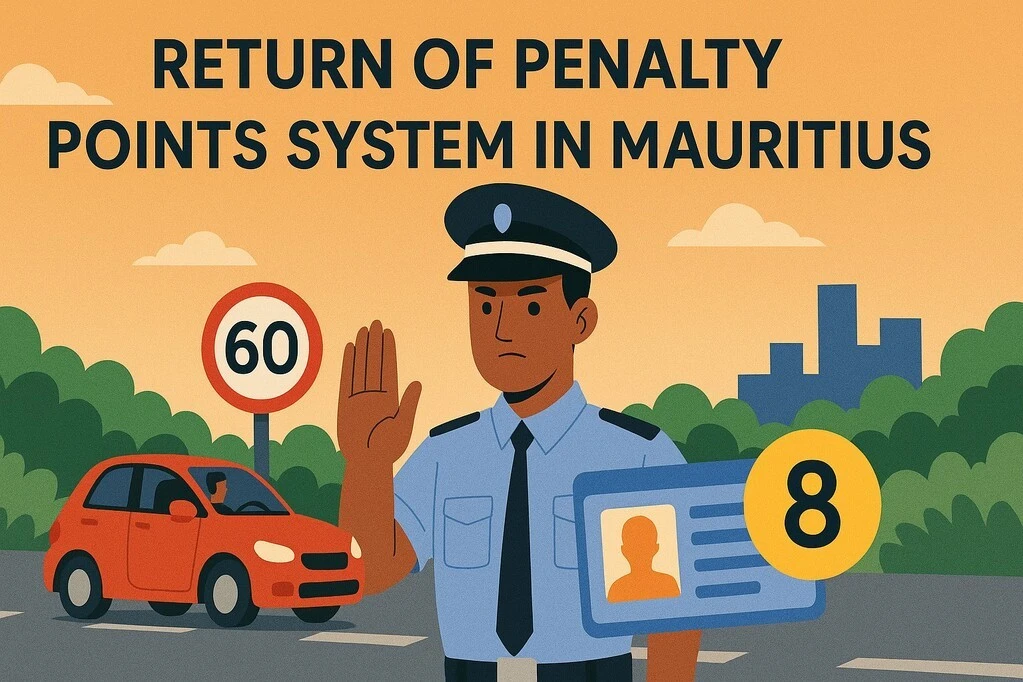
Mauritius is getting serious about road safety. With road deaths climbing and dangerous driving becoming all too common, the government is reintroducing a penalty points system as part of the new Road Traffic (Amendment) Bill 2025. But will it work this time?
Let’s break it down and see how other countries have fared with similar systems.
What’s Changing for Drivers?
The new penalty points system is far more advanced than the short-lived version from 2013. Here’s what Mauritian motorists need to know:
Every offence adds points to your licence. Serious ones like street racing can earn up to 10 points, while smaller infractions like running a red light may carry 2 to 4.
Reach the limit and you’re off the road. If you accumulate 15 points (or 10 for a provisional licence), you are automatically disqualified for 6 to 12 months.
Points stay on your record for three years. They do not vanish quickly, so repeat offences really add up.
You’ll need a rehab course to get your licence back. This focuses on safe driving habits and is now mandatory before reinstatement.
Redemption is possible. If you reach 10 to 14 points, you can ask for up to 3 points to be removed after taking a certified driving course. This can only be done once every three years.
Foreign drivers included. International permit holders are also tracked under this system, closing previous loopholes.
Everything goes digital. A new e-Driving Licence and digital tracking mean quicker processing, fewer errors, and real-time access to your points.
The goal is clear: encourage safer driving and make sure repeat offenders face real consequences.
What Went Wrong in 2013?
Mauritius first tried a points system in 2013. It failed quickly. Why?
It relied on a clunky paper-based system with poor record keeping
Drivers were unclear about how it worked
Uneven enforcement across districts made it feel unfair
Professional drivers feared job loss, leading to protests
A lack of public education and communication left many confused
This time, the government promises better tech, clearer processes, and a public awareness campaign to avoid repeating those mistakes.
Where It Works: Lessons From Abroad
Countries like France, Spain, and Italy have shown that when done right, penalty point systems really can reduce road deaths.
France introduced its system in 1992. In the early years, accidents dropped by nearly 20 percent.
Italy saw a 25 percent fall in traffic fatalities after introducing a points system in 2003.
Spain is a standout example. Within the first year of launching its system in 2006, road deaths dropped by 20 percent. Over the following decade, fatalities fell by around 50 percent. This dramatic turnaround was backed by strict enforcement and national awareness campaigns.
What made these systems effective? Strong enforcement, tech support, and consistent public education.
Where It Struggles
Penalty point systems do not always succeed. In places where enforcement is inconsistent or the public sees the system as confusing or unfair, it can fail to change behaviour. Administrative delays or lack of transparency can also erode trust.
The lesson for Mauritius is simple: clear communication, reliable digital infrastructure, and consistent enforcement are key if this is to work.
So, Will It Work in Mauritius?
This time, the signs are promising. The system is smarter, more flexible, and backed by technology. Offences are better defined, and drivers have a chance to reform through rehab courses and point redemption.
But success will depend on how well it is enforced, how clearly it is communicated, and how efficiently it is managed. Authorities will also need to watch for unintended effects, especially for professional drivers who depend on their licences to earn a living.
Mauritius has the blueprint to make its roads safer. Whether it follows through will depend on how well the system is rolled out and how well drivers adapt.
AutoCloud.mu Insight: As Mauritius moves toward a more digital and integrated road safety system, platforms like AutoCloud.mu can support the transition by strengthening data flows, linking institutions, and helping the public understand their own driving records in real time. Better visibility means better accountability.
What do you think? Will the new system finally change driving habits across the island? Let us know.
More Articles
![Driving Under Curfew: A Practical Guide for Mauritian Motorists]()
Driving Under Curfew: A Practical Guide for Mauritian Motorists
A curfew changes the rhythm of daily life almost overnight. For anyone who relies on a car to get to ...Read more![Is Your Car Covered If It's Damaged in a Riot?]()
Is Your Car Covered If It's Damaged in a Riot?
Monday night's unrest on 12 October left more than broken glass behind. Vehicles were set alight in Barkly and elsewhere, and ...Read more![Roads Open, Buses Off: What Last Night's Unrest Means for Motorists]()
Roads Open, Buses Off: What Last Night's Unrest Means for ...
Mauritius woke up on Tuesday 13 October to closed schools, a silent Metro Express and buses parked in their depots. After ...Read more