New Cars
 Used Cars
 Rentals
 Boats
Boats Motorbike
 Utility
 Services
 News & Review
Fair Competition or Unfair Advantage? The Uber Question in Mauritius
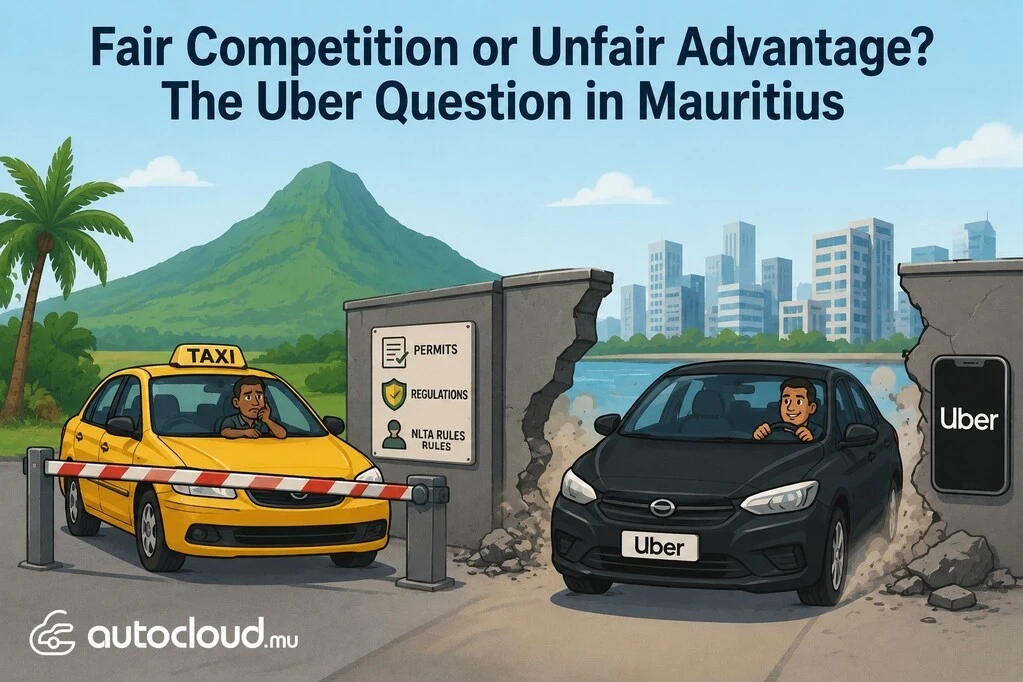
Alalila 2.0 powered by Uber launched on 25 March 2026 without formal NLTA approval. The government has flagged this as a concern and is now developing a regulatory framework. But whilst the service rolls out, two very different perspectives on its impact have emerged. For everyday commuters, Uber addresses a real problem. You can now book a ride with transparent, upfront pricing through an app instead of negotiating fares at the roadside. The service uses licensed PSVL drivers, so you're not taking an unlicensed taxi. Waiting times are visible. Vehicles are tracked. Drivers are rated. This is what motorists have wanted for years. It removes the friction from a transaction that shouldn't require haggling. For visitors unfamiliar with local taxi customs, it removes uncertainty. For residents tired of negotiation, it offers clarity. The practical benefits are real, and thousands are using the service daily. Licensed taxi operators see something different. They've operated within NLTA regulations for years: licences, insurance, compliance checks, fixed standards. Now a platform launches with none of that formal approval, uses their licensed drivers, and operates under different commercial terms without the same regulatory scrutiny. The concern is structural. An app-based platform can adjust pricing algorithmically, manage driver relationships through contract terms that bypass traditional employment protections, and operate without the same licensing framework that governs traditional taxi services. Licensed operators must navigate all of this. Alalila 2.0 arrives without that burden. For taxi families dependent on traditional dispatch and street hailing, the platform represents competition that didn't exist on a level playing field. There is no legal framework for online taxi platforms in the Road Traffic Act. The NLTA has no jurisdiction over Alalila 2.0 because the law does not give it authority. This creates an asymmetry: traditional taxis operate under one set of rules, the new platform effectively operates under none. Licensed taxi operators have formally raised this issue. Their argument is not anti-innovation. It is pro-fairness: all transport providers should operate under consistent, modern, and equally enforced rules. Transparent pricing, consumer protection, and service standards should apply to everyone. The government is developing a regulatory framework for online taxi booking platforms. When implemented, all providers should operate under the same standards. The question is when this framework arrives and how strictly it is applied. Until then, Mauritius has an uneven system: traditional operators working within established regulations, a new platform operating without formal oversight, and motorists enjoying both without necessarily understanding the regulatory gulf between them. The opportunity now is to build an integrated framework that enables innovation whilst ensuring fairness. All transport providers should operate under consistent, modern, and equally enforced rules. Transparent pricing, strong consumer protection, and consistent service standards protect motorists, protect legitimate taxi services, and create space for technology to improve transport without destabilising the sector. Keep watching how this regulatory framework develops. When it lands, everything changes for Alalila 2.0, for licensed taxis, and for how you book your next ride.The Commuters View
The Local Taxi Driver's View
The Real Issue
What's Being Done
The Path Forward
More Articles
![The Road Traffic (Amendment) Act 2026: What Has Changed and What It Means for You]()
The Road Traffic (Amendment) Act 2026: What Has Changed and What ...
When we last covered this, the new road traffic measures were still proposals. They are now law.The Road Traffic (...Read more![Up, Down or Holding? The Honest Outlook for Fuel Prices]()
Up, Down or Holding? The Honest Outlook for Fuel Prices
Scroll through the local press this month and you could be forgiven for bracing yourself at the pump. Headlines have ...Read more![Speed Limits and Drink-Driving Limits in Mauritius: A Quick Guide for Drivers]()
Speed Limits and Drink-Driving Limits in Mauritius: A Quick Guide ...
Knowing the limits on Mauritian roads is the simplest way to stay safe, avoid a fine and keep your licence. ...Read more