New Cars
 Used Cars
 Rentals
 Boats
Boats Motorbike
 Utility
 Services
 News & Review
Mauritius Budget 2026: What Changed for Vehicle Owners
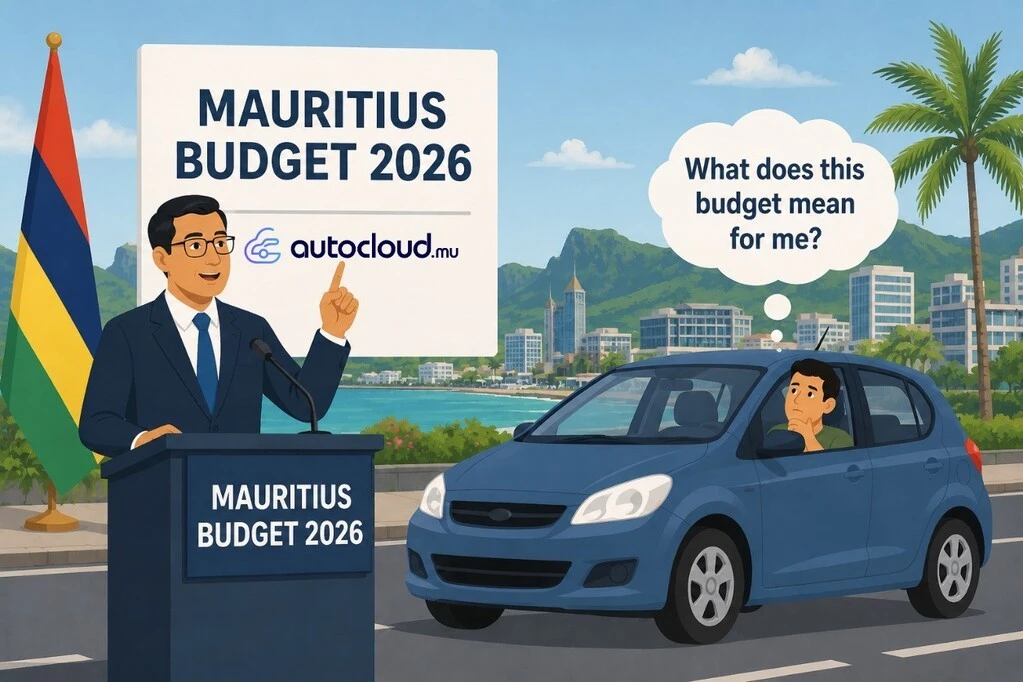
The 2026 budget speech has brought some changes to how Mauritians own, register and operate vehicles. If you're a car enthusiast, a business owner, or simply someone who relies on your vehicle daily, these measures will affect you in ways both practical and financial. Let's unpack what's happened and what it means.
The Cost of Keeping That Special Number Plate
One of the most immediate changes is the new annual fee on old and personalised registration marks. If your vehicle sports a vintage single-letter plate or a cherished personalised registration, you'll now pay an annual fee when you renew your Motor Vehicle Licence.
The fees are tiered by mark format. A single-letter old plate costs Rs2,000 per year, while a nine-letter grouping reaches Rs25,000. Most personalised marks fall somewhere between, typically ranging from Rs5,000 to Rs15,000. For someone who's held a plate for decades and considers it part of their vehicle's character, this is a new annual consideration.
The silver lining is that you can now retain an old or personalised mark without necessarily having another vehicle to assign it to. You simply pay the prescribed fee and keep the registration in your name. This works well if you're between vehicles or want to preserve a plate for sentimental reasons. However, if you're looking to transfer a plate to a family member or spouse, the rules now stipulate that transfers are restricted to spouses, next-of-kin, ascendants or descendants, with a reduced fee as an incentive for keeping it in the family.
Your Driving Record Matters More Now
From an administrative perspective, one of the more stringent changes ties Motor Vehicle Licence renewal directly to the settlement of outstanding traffic fines. This is straightforward in principle: if you owe fines, you'll need to clear them before your MVL renewal is processed.
For most road-conscious motorists, this is relatively painless. But for those who've accumulated a few unpaid penalties, it creates a hard deadline. It's worth noting that this measure reflects a broader emphasis on compliance and revenue collection across multiple touchpoints.
Car Insurance Costs Are Rising Again
A new 5% tax on short-term insurance takes effect from 1 January 2027, applying to both new contracts and renewals. Car insurance, medical insurance, and home insurance are all affected. Life insurance and pension plans are exempt.
The tax will be a minimum of 5.26%, though it could be higher depending on the policy. To put this in perspective: if your annual car insurance premium is Rs30,000, you'll pay at least an additional Rs1,578 just from this tax alone.
"Customers will pay their premiums at least 5.26% more expensive, and that's just a minimum," explains Abdel Ruhomutally, Managing Director of GFA Insurance and Vice-President of the Insurers Association of Mauritius. This adds to the pressure already felt by motorists, who have experienced premium increases of 20 to 30% since January 2026 due to rising spare parts costs and higher payroll expenses across the insurance sector.
Narrower Relief, Targeted Support
The budget has tightened exemptions from duties and taxes on vehicle acquisition, but broadened access in one key area. Parents or legal guardians of a person with a disability aged 18 or older who is receiving a permanent carer's allowance now qualify for duty-free vehicle acquisition. This is a genuine expansion of support for carers, recognising the real costs of mobility for those with additional needs.
Meanwhile, the rules on duty-free motor vehicle facilities have been tightened. If you've already benefited from a duty-free vehicle acquisition, you can only acquire another duty-exempt vehicle once the applicable exemption period has fully expired. This closes a loophole that previously allowed quicker re-acquisition.
Support for SMEs in Growth Sectors
There's one avenue where the budget has opened a door. Registered SMEs operating in transformative sectors can now claim a customs duty exemption on eligible utility vehicles. This is pitched as a measure to support small business growth, particularly in sectors deemed strategically important. If you run a logistics, agricultural or renewable energy business, this might be worth exploring with your accountant or through the relevant government channels.
Insurance Transparency and High-Value Vehicles
Motor insurance companies are now required to submit annual electronic statements to the Mauritius Revenue Authority for all vehicles with an insured value above Rs2 million. The statement includes the insured amount and policyholder name. This is a transparency measure designed to improve compliance and revenue collection on high-value asset transactions.
If you own a luxury or high-value vehicle, expect your insurer to be part of a new reporting cycle. It's not onerous, but it's worth being aware of if you're in this bracket.
The Longer View: Buses and Green Mobility
Beyond the immediate changes that affect private motorists, the budget signals a shift in thinking about public transport. The legal operating age for buses is being reduced from 21 to 16 years, phased in over five years. This is a quality-of-life measure for commuters: newer buses tend to be more reliable, safer and more comfortable.
In parallel, the government has committed to developing a framework for solar-powered charging stations for buses. This is the green mobility piece of the jigsaw, though it remains largely prospective. When these facilities come online, they'll reduce emissions and operating costs for public transport operators.
What This Means for Your Vehicle Choices
Personalised plates now carry an annual cost, which is worth factoring into the total cost of ownership. If you're exploring duty-free acquisition, plan ahead given the tightened re-acquisition rules.
For those shopping on AutoCloud.mu, understanding what these changes mean for vehicle values and ownership costs helps inform better decisions.
A Note on Next Steps
These measures are pending parliamentary debate and may be amended before final enactment. Keep an eye on official government communications as the legislative process unfolds.
More Articles
![KOREK! What the Government's New App Means for Motorists]()
KOREK! What the Government's New App Means for Motorists
Mauritius now has a single digital gateway to public services, and the first thing it does for motorists is put ...Read more![Never Miss the Right Vehicle: Set Up Email Alerts]()
Never Miss the Right Vehicle: Set Up Email Alerts
New listings are added to AutoCloud.mu every day, and the good ones often go fast. Email Alerts do the ...Read more![Tougher Fines, New Offences: What the 2026 Road Traffic Bill Means for Drivers]()
Tougher Fines, New Offences: What the 2026 Road Traffic Bill Means ...
Mauritius is about to overhaul how it punishes dangerous and careless driving. The Road Traffic (Amendment) Bill (No. XV of 2026), ...Read more