New Cars
 Used Cars
 Rentals
 Boats
Boats Motorbike
 Utility
 Services
 News & Review
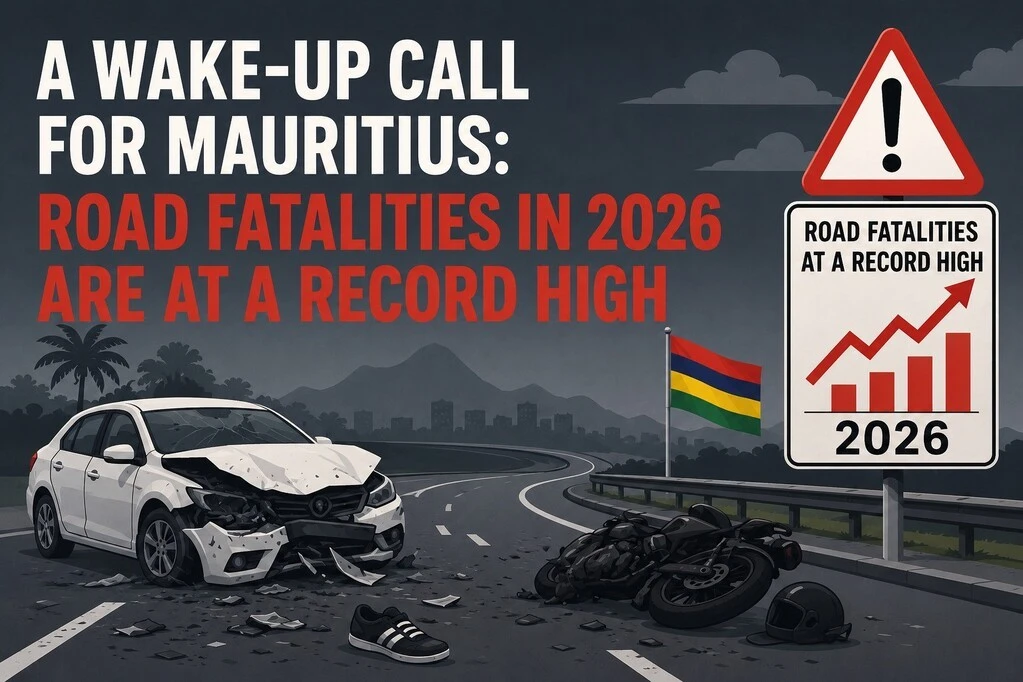
A Wake-Up Call for Mauritius: Road Fatalities in 2026 Are at a Record High
It has become almost impossible to open Facebook these days without being confronted by yet another devastating road accident here in Mauritius. A familiar name, a shared post, a community in shock. What once felt like tragic but isolated incidents now feels like a relentless, weekly drumbeat of loss that our island simply cannot keep ignoring.
By 28 May 2026, Mauritius had already recorded 57 road deaths from 54 fatal accidents. With seven months of the year still to go, 2026 is on track to become the most devastating year for road fatalities on record, and the urgency to act has never been greater.
The Vehicles Most Involved
Motorcycles have historically been the most dangerous category on our roads, and across the broader picture they still account for a significant share of fatal accident involvements. However, something notable has shifted in 2025 and 2026. Private cars have actually overtaken motorcycles in the number of vehicles involved in fatal accidents, with 55 car involvements against 39 motorcycles in 2025, and 29 against 23 so far in 2026. That is a trend worth paying close attention to.
This tells us something important: this is no longer a motorcycle problem alone. It is a road culture problem, and it is one that affects every single driver on our roads.
Vans and goods vehicles add a further significant share to the toll. Rising delivery demand and informally operated freight vehicles are adding pressure to roads that were simply not designed for today's traffic volumes.
Who Is Being Lost
The human cost is stark. Young men continue to represent the demographic most at risk, with male fatalities vastly outnumbering female ones. But the crisis reaches far wider than one group, cutting across working-age adults, young people, and older citizens alike. These are fathers, mothers, children, and colleagues. People with lives, plans, and families who loved them.
More Than an Enforcement Problem
It would be easy to point fingers solely at speeding motorcyclists or distracted drivers. The reality, however, tells a more uncomfortable story. Enforcement alone has clearly not been enough. Infrastructure, road design, driver education, and public accountability all need to be part of the conversation.
A Line That Cannot Keep Moving
Every year, there are calls for action. And every year, we share another post on Facebook, mourn another family torn apart, and wonder when things will actually change.
Mauritius is a small island. We are a close-knit community. That means every road death reverberates across families, neighbourhoods, and workplaces in a way that statistics alone cannot capture. We owe it to one another to demand better, to drive better, and to hold our systems accountable.
The road should not be the most dangerous place in Mauritius. But right now, for too many people, it is.
If you are thinking about getting a car equipped with the latest safety features, browseAutoCloud.mu today. Because the safest journey is the one you come home from.
More Articles
![Driving Under Curfew: A Practical Guide for Mauritian Motorists]()
Driving Under Curfew: A Practical Guide for Mauritian Motorists
A curfew changes the rhythm of daily life almost overnight. For anyone who relies on a car to get to ...Read more![Is Your Car Covered If It's Damaged in a Riot?]()
Is Your Car Covered If It's Damaged in a Riot?
Monday night's unrest on 12 October left more than broken glass behind. Vehicles were set alight in Barkly and elsewhere, and ...Read more![Roads Open, Buses Off: What Last Night's Unrest Means for Motorists]()
Roads Open, Buses Off: What Last Night's Unrest Means for ...
Mauritius woke up on Tuesday 13 October to closed schools, a silent Metro Express and buses parked in their depots. After ...Read more