New Cars
 Used Cars
 Rentals
 Boats
Boats Motorbike
 Utility
 Services
 News & Review
Trump's Car Tariffs Could Actually Be Good News for Mauritius
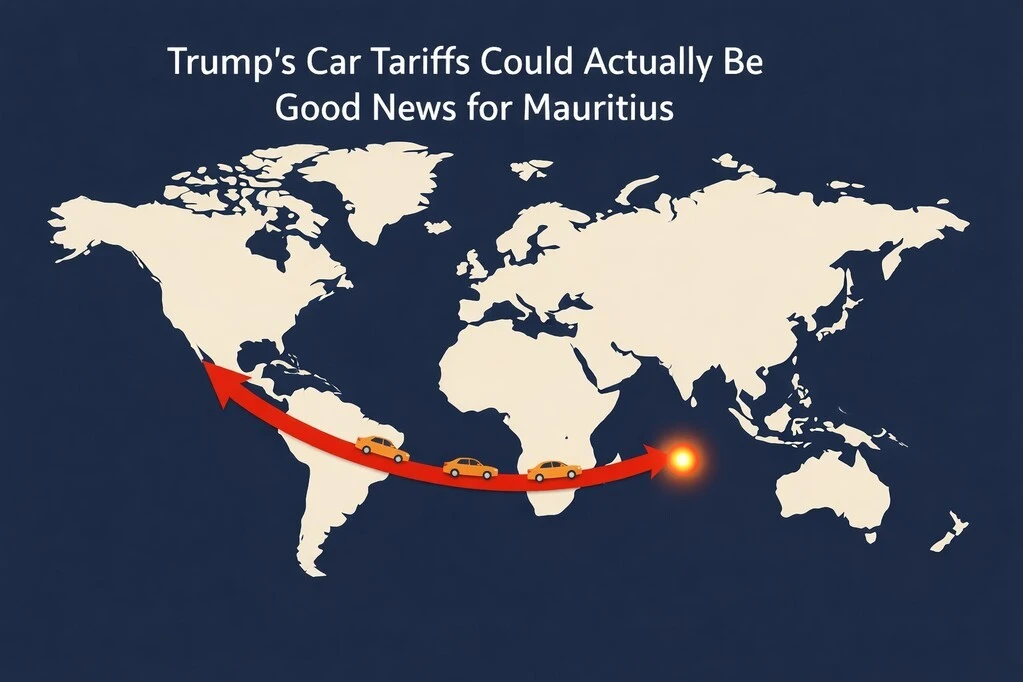
When the United States slapped a 25% tariff on all imported cars on 3 April 2026, most headlines focused on the pain: higher prices for American consumers, supply chain disruption, and tension with trading partners. But for a small island economy like Mauritius, there is a genuinely interesting upside hiding in all that noise. Let us explain.
What Just Happened in the US?
The Trump administration's tariff, which officially came into force on 3 April, applies to all foreign-made vehicles entering the American market, regardless of origin. It is one of the most sweeping moves in automotive trade policy in decades. For manufacturers who have built their business models around US exports, this is a serious headache. They now face a stark choice: absorb the cost, raise prices for American buyers, or find somewhere else to sell.
Most will do some combination of all three. And that last option, finding new markets, is where things get interesting for us.
The China Effect
Chinese electric vehicle brands, most notably BYD, have been on a global expansion drive for the past few years, steadily growing their presence in emerging markets across Africa, the Middle East, and the Indian Ocean region, including Mauritius.
The US market was never a realistic near-term target for most Chinese EV makers anyway. But this tariff sharpens their focus elsewhere. When you cannot sell into the world's largest car market, you double down on everywhere else. That means more models, more inventory, and very likely more competitive pricing flowing into markets like ours.
The Opportunity for Mauritius
Mauritius imports almost every vehicle it sells, and consumers here have historically paid a premium for newer automotive technology. If Chinese manufacturers redirect inventory toward non-US markets, the practical effect could be a broader range of affordable EVs available locally at better price points than we have seen before. It is the fairly straightforward logic of supply and demand. When a major export channel closes, product flows elsewhere.
That said, tariff-driven shifts take time to work through supply chains, and there is no guarantee that manufacturer savings translate directly to lower prices on forecourts in Port Louis. Worth watching closely as things develop.
The Bigger Picture
For a country like Mauritius, which sits outside the major trade blocs involved in this standoff, there is a real opportunity to benefit from the redirection of goods and investment. The 25% US auto tariff may end up nudging the local EV transition forward faster than anyone expected.
At AutoCloud, we will keep you updated as this story develops and as new vehicles make their way into the local market. If you want to understand how the changing landscape affects your next vehicle decision, start with us.
Stay ahead of the market at autocloud.mu. Whether you are buying your first EV or managing a fleet of twenty, we help you make smarter decisions with better information.
More Articles
![The 5 Most Reliable Cars of 2025]()
The 5 Most Reliable Cars of 2025
Whether you're buying new or used, reliability should sit near the top of your checklist. This year's data, drawn from ...Read more![Diesel Prices Rise in Mauritius: What You Need to Know]()
Diesel Prices Rise in Mauritius: What You Need to Know
If you filled up your diesel tank before Wednesday this week, consider yourself fortunate. The Petroleum Pricing Committee (PPC) confirmed ...Read more![Mauritius Car Market Stalls at the Start of 2026: What the Numbers Are Telling Us]()
Mauritius Car Market Stalls at the Start of 2026: What the ...
The first two months of 2026 have delivered a sobering message to the Mauritian automotive industry. With just 5,175 vehicles registered between ...Read more