New Cars
 Used Cars
 Rentals
 Boats
Boats Motorbike
 Utility
 Services
 News & Review
Lots Full, Buyers Gone: Why New Cars Are Gathering Dust
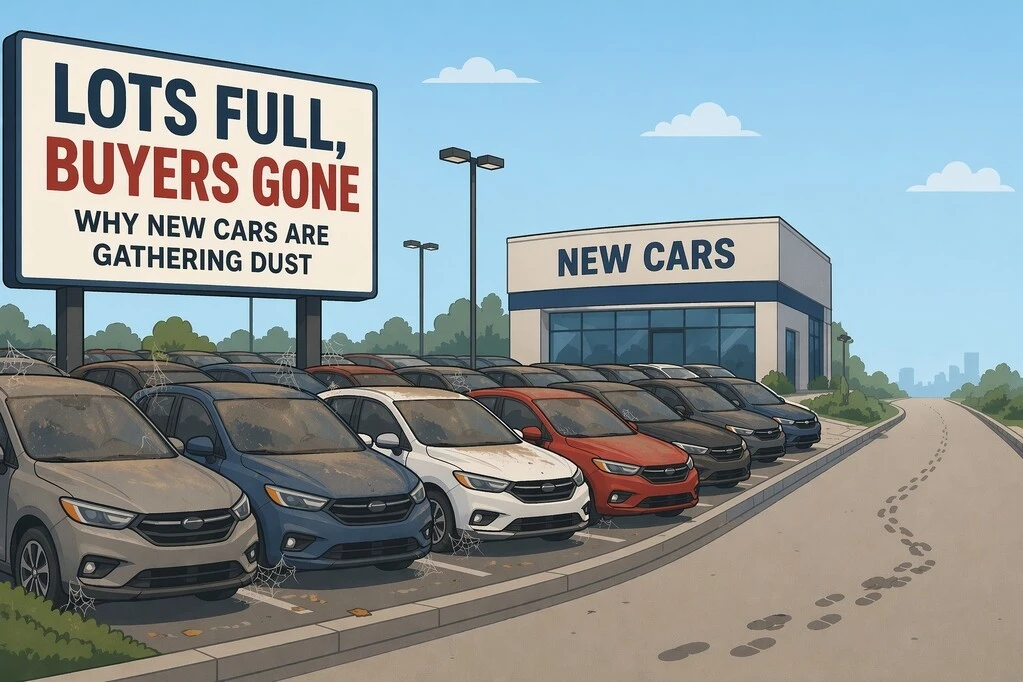
There is something quietly alarming about a brand-new car sitting in a dealer's lot for months on end. It has never been driven, never been loved, and yet it is already costing money. This is the reality facing the automotive market right now, and it is a problem that touches everyone from the importer to the everyday buyer. The short answer is taxation. Following a revision of excise duties that came into effect in June 2025, the cost of buying a car in Mauritius has risen sharply. Hybrid and electric vehicles, which were previously encouraged through favourable tax treatment, are now subject to the same duties as conventional models, with rates ranging from 45% to 100%. The timing could not have been worse. A wave of vehicles had already been ordered and was clearing customs when the new measures landed. Dealers were contractually obligated to receive stock they could no longer sell at the original price points. Almost overnight, a car that retailed at Rs 1.2 million jumped to Rs 1.9 million. Another moved from Rs 1.5 million to Rs 2.2 million. The buyer pool, already stretched by the rising cost of living, simply evaporated. Before the 2025-2026 budget measures, the market was moving around 1,500 vehicles per month. That figure has since dropped by roughly 40%, according to Mrinal Teeluck, Secretary General of the Motor Vehicles Dealers Association. The used car segment tells a similar story, with demand down an estimated 35% to 40% as well. Dealerships have responded by offering discounts ranging from Rs 50,000 to Rs 400,000, depending on the make and model. But as Teeluck notes, there is a ceiling to how far those reductions can go. A dealer cannot simply halve the price of a vehicle and remain solvent. Meanwhile, the cost of storing unsold stock continues to mount month after month. It would be easy to look at this as a niche industry problem, but the ripple effects are broader than they appear. When consumers pull back from big-ticket purchases, it reflects a deeper anxiety about household finances. Fuel costs, electricity bills, food prices and employment uncertainty are all feeding into a reluctance to commit to a car payment. As Zaid Ameer, president of the Dealers in Imported Vehicles Association, put it, buying a car has simply stopped being a priority for many families. This kind of market paralysis has consequences beyond the showroom floor. It affects logistics, insurance, finance, and the wider ecosystem of businesses that depend on vehicle sales moving at a healthy pace. The industry is not sitting idle. Dealerships are already scaling back imports where their contractual commitments allow, and both the MVDA and DIVA are preparing detailed proposals ahead of the next budget consultation. The focus is particularly on hybrid vehicles, which offer fuel savings of around 50% and have been part of the market long enough that the infrastructure and consumer familiarity are already in place. There is also a practical argument from the government's perspective: the anticipated revenue from increased duties has not materialised, precisely because demand collapsed. A tax that chokes off sales entirely does not generate income; it generates empty lots. This is where data-driven insight becomes genuinely valuable. At AutoCloud.mu, we work with businesses navigating exactly this kind of complexity, helping make sense of market signals, stock positions, and operational pressures so that decisions are grounded in evidence rather than guesswork. When a market shifts this quickly, having clarity on what the numbers are actually telling you is not a luxury; it is a necessity. The automotive sector is watching the next budget closely, and rightly so. A recalibration of the duty structure, particularly around hybrids, could provide meaningful relief without sacrificing long-term environmental goals. But the deeper lesson here is about resilience and adaptability. Markets change, sometimes suddenly, and the businesses that weather those changes best are the ones that stay informed, stay flexible, and plan ahead. A lot full of unsold cars is more than a dealership headache. It is a signal worth paying attention to.How Did We Get Here?
The Numbers Tell a Stark Story
It Is Not Just About Cars
Where Do We Go From Here?
The Road Ahead
More Articles
![The Roadblock Lottery: Why One in Four Drivers Lost This Weekend]()
The Roadblock Lottery: Why One in Four Drivers Lost This ...
If you were out on the roads between Saturday 3 and Monday 5 October, there is a good chance you met a ...Read more![Skip the Queue: Traffic Fines Go Online From 30 October]()
Skip the Queue: Traffic Fines Go Online From 30 October
Few things sour a morning quite like a Fixed Penalty Notice. Until now, settling one has usually meant taking time ...Read more![The Road Traffic (Amendment) Act 2026: What Has Changed and What It Means for You]()
The Road Traffic (Amendment) Act 2026: What Has Changed and What ...
When we last covered this, the new road traffic measures were still proposals. They are now law.The Road Traffic (...Read more