New Cars
 Used Cars
 Rentals
 Boats
Boats Motorbike
 Utility
 Services
 News & Review
Seven Tips for Selling Your Car Safely in Mauritius
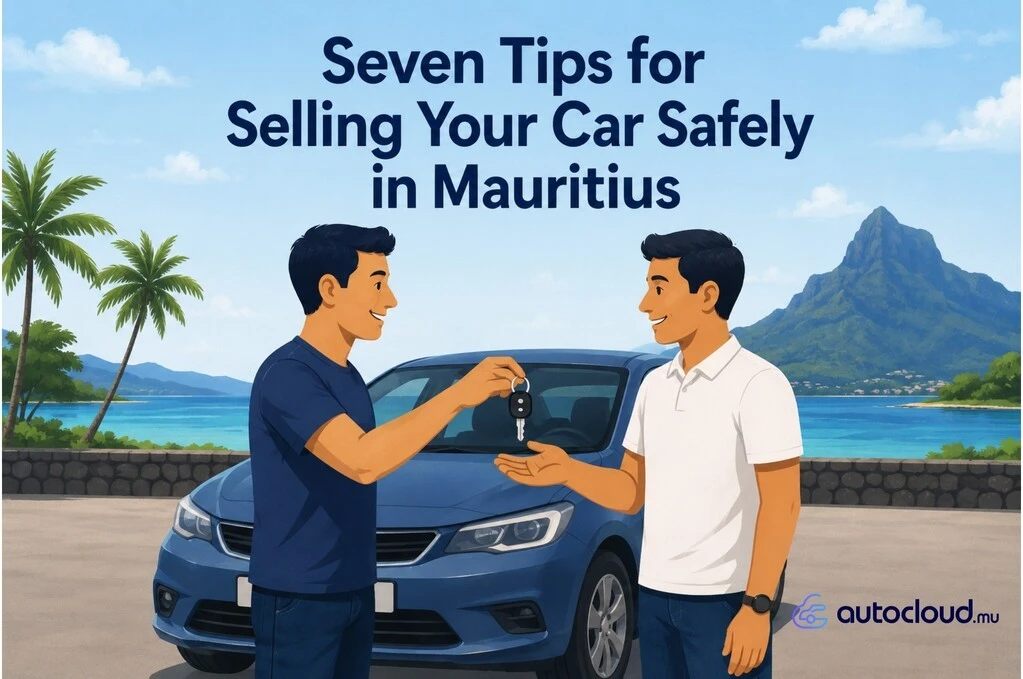
Working in the motoring world means I naturally get a lot of questions from friends and family about buying and selling cars. Whether it is a cousin listing their first Nano or an uncle finally parting with a well loved Toyota, everyone wants the same thing: a smooth sale and no nasty surprises. When it comes to selling privately, my most important piece of advice has always been to stay alert to scams. Mauritius is a small island and most deals go through without a hitch, but the moment money and vehicles change hands, there will always be a few people looking to take advantage. A little caution goes a long way. Here are my seven top tips to help you sell your car safely. If you are listing your car online, your account is the front door to the whole sale, so keep it locked. Never share your login details with anyone. Use a strong password that mixes upper and lower case letters, numbers and a symbol, and avoid anything easy to guess like your car registration or date of birth. Change it from time to time and do not reuse the same one across accounts. If a buyer ever asks for your login details to "verify" your listing, that is a scam every time. Most buyers are genuine, but a few will try their luck. Be wary of anyone who is ready to pay full price without ever seeing the car, especially if they claim to be abroad and want to arrange "shipping" or a third party agent. Be careful with links too. If someone messages you to click through and enter your bank or card details to "release payment" or "confirm the sale", do not do it. Genuine buyers in Mauritius pay by bank transfer, Juice or cash, not by asking for your card information. Finally, keep control of your documents. Show your registration book in person only, and never let a stranger photograph it or your national identity card. Those details can be misused to impersonate you or the vehicle. The viewing is where most of the risk sits, so set it up on your terms. Check the car yourself beforehand so you know its condition inside out. If you know the vehicle better than anyone, nobody can talk you down with a fault that was never there. If a buyer brings a friend or a mechanic, keep a close eye on them, as one can distract you while the other quietly creates a "problem" under the bonnet to justify a lower price. Agree in advance who is coming and set a limit on numbers, and have a friend or family member with you so one of you can watch the buyer while the other watches their companion. Above all, never hand over your keys. If you have a keyless fob, keep it on you at all times, including during any test drive. Staying in control of the car keeps you in control of the sale. A test drive is reasonable, but do not skip the basics before you let anyone behind the wheel. Ask to see the driver's licence and check the photo matches the person in front of you. Confirm they are properly insured to drive your vehicle, because if anything happens on that drive, you do not want to be left carrying the cost. Having someone with you here is worth its weight in gold. It means you are never outnumbered and quietly discourages anyone from trying something they should not. This is the stage where scams cost the most, so slow down and get it right. Bank transfer and juice are fast and safe options. Only hand over the keys once you can personally see the cleared funds in your own account, not a screenshot, not a "pending" notification and not a text message that could easily be faked. Genuine buyers will understand you waiting for the money to land. If you are dealing in cash, meet at a bank so the notes can be checked and counted properly. It is far safer than accepting a thick envelope in a car park and hoping for the best. Once you have agreed the sale, get the paperwork done promptly. In Mauritius the sale is formalised through a deed of sale, which must be registered at the Registrar General's Department within fifteen days. Update the ownership records with the National Land Transport Authority as soon as you can, because until the vehicle is officially out of your name you could be chased for road tax, contraventions or demerit points earned by the new driver. Since 1 July 2025, transfer fees on second hand vehicles have been abolished and much of the process can be done online through NLTA e-Services with a MauPass account, so there is little excuse to leave it hanging. If you are unsure of the steps, our guide onhow to register or transfer vehicle ownership in Mauritius walks you through it. No checklist can replace common sense. If a buyer is rushing you, dodging your questions, refusing to meet in person or offering a deal that feels too good to be true, it usually is. You are under no obligation to go through with a sale that does not feel right, and a real buyer will respect a seller who does things properly. Selling your car should be exciting, not stressful. Keep control of your keys and your documents, and wait for the money before it leaves your hands. Do that, and the only thing you will be handing over is a set of keys to a happy new owner. Ready to move your car on?List your car on AutoCloud.mu and reach thousands of genuine buyers across the island.1. Protect your account and use strong passwords
2. Watch out for fraudulent buyers
3. Stay vigilant during viewings
4. Allow test drives with caution
5. Use a safe method for payment
6. Register the deed of sale and update the NLTA
7. Trust your instincts
More Articles
![Driving Under Curfew: A Practical Guide for Mauritian Motorists]()
Driving Under Curfew: A Practical Guide for Mauritian Motorists
A curfew changes the rhythm of daily life almost overnight. For anyone who relies on a car to get to ...Read more![Is Your Car Covered If It's Damaged in a Riot?]()
Is Your Car Covered If It's Damaged in a Riot?
Monday night's unrest on 12 October left more than broken glass behind. Vehicles were set alight in Barkly and elsewhere, and ...Read more![Roads Open, Buses Off: What Last Night's Unrest Means for Motorists]()
Roads Open, Buses Off: What Last Night's Unrest Means for ...
Mauritius woke up on Tuesday 13 October to closed schools, a silent Metro Express and buses parked in their depots. After ...Read more