New Cars
 Used Cars
 Rentals
 Boats
Boats Motorbike
 Utility
 Services
 News & Review
The Roadblock Lottery: Why One in Four Drivers Lost This Weekend
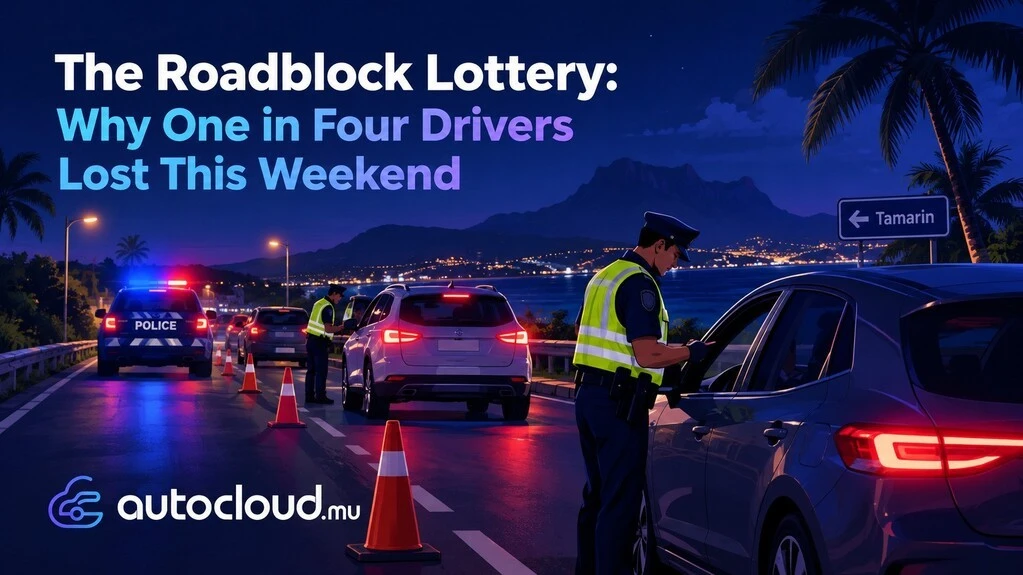
If you were out on the roads between Saturday 3 and Monday 5 October, there is a good chance you met a police checkpoint. Operation "Weekend Crackdown" was the first major island-wide operation since the Road Traffic (Amendment) Act 2026 came into force on the night of 29 to 30 September, and the numbers suggest the police intend to make the new law felt.
The Weekend in Numbers
From 6am on Saturday to 6am on Monday, officers checked 8,255 vehicles across the island. Of those, 2,063 resulted in Road Traffic Offences (RTOs). That is roughly one vehicle in four.
The Traffic Branch issued the most offences with 693, followed by the Eastern Division with 382 and the Emergency Response Service (ERS) with 285. The ERS stopped the most vehicles, 1,836, ahead of the Traffic Branch on 1,406 and the Southern Division on 1,259.
Read those figures side by side and a pattern emerges. On the reported numbers, the Traffic Branch recorded an offence for roughly every second vehicle it stopped, while the ERS cast a wider net with a lower strike rate.
The figure that matters most, though, is smaller. 21 drivers tested positive for alcohol and 18 for drugs. Drug-driving cases running almost level with drink-driving is a detail worth pausing on.
The operation went beyond the roads. Police carried out 222 shop checks, resulting in 18 fines, 16 in the South and two in the East. At sea, the National Coast Guard inspected 234 pleasure craft, issuing two fines, and checked 31 skippers, two of whom were booked. Coast Guard officers also inspected 48 vehicles, recording six RTOs, and checked 37 beach vendors.
What Changed on 30 September
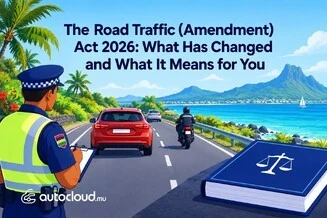
The Act brings far tougher penalties for drink and drug driving, a new road rage offence and stricter sentences for causing death on the road. We have broken it all down in our guide, The Road Traffic (Amendment) Act 2026: What Has Changed and What It Means for You.
Picture a Saturday Night
Imagine a friend's birthday dinner in Grand Baie. A couple of drinks, a short drive home, a breath test at a roadblock in Pamplemousses.
Until last month, that meant a fine and a court date. Today, it means an appearance before a magistrate, months without a licence and a minimum fine of Rs 200,000, before anyone has even raised the question of prison. Once seizure comes into force, it could mean losing the car as well.
That is the deterrent the government is betting on. With more than 100 road deaths recorded in the first eight months of the year, and the penalty points system in place since 31 January, the message is that warnings have run their course.
The Choice Before the Checkpoint
No law can put an officer on every road at 2am. The real decision is made before the key goes in the ignition, and the new penalties make that decision far easier to get right.
If you are shopping for a used car, the exhaust provisions are worth keeping in mind too. When you browse listings onAutoCloud.mu, ask the seller whether the exhaust is original before you commit, so a loud upgrade does not become your problem. And keep an eye on the AutoCloud.mu blog as the remaining parts of the Act come into force.
More Articles
![Skip the Queue: Traffic Fines Go Online From 30 October]()
Skip the Queue: Traffic Fines Go Online From 30 October
Few things sour a morning quite like a Fixed Penalty Notice. Until now, settling one has usually meant taking time ...Read more![The Road Traffic (Amendment) Act 2026: What Has Changed and What It Means for You]()
The Road Traffic (Amendment) Act 2026: What Has Changed and What ...
When we last covered this, the new road traffic measures were still proposals. They are now law.The Road Traffic (...Read more![Up, Down or Holding? The Honest Outlook for Fuel Prices]()
Up, Down or Holding? The Honest Outlook for Fuel Prices
Scroll through the local press this month and you could be forgiven for bracing yourself at the pump. Headlines have ...Read more